

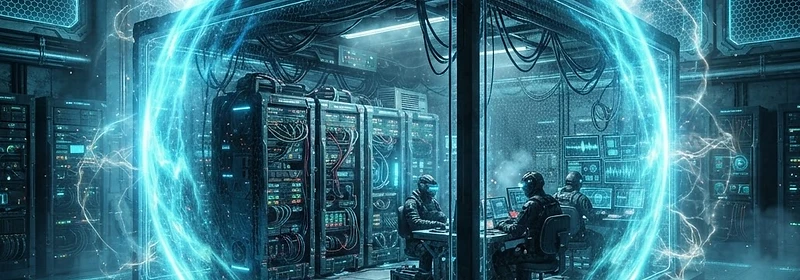
EMP Protection & Tempest Rooms: Critical Infrastructure Shielding in Qatar (2026)
The Growing Global EMP Threat
Maintaining the resiliency of the electric grid, sensitive data, and communication channels has become a growing concern globally as Electromagnetic Pulse (EMP) events continue to threaten society and the operation of business as we know it.
EMP events include two main categories:
HEMP (High-Altitude Electromagnetic Pulse) - Occurs when a nuclear weapon is detonated in outer space (above 29 km / 18 miles). The resulting electromagnetic pulse can travel across an entire region, simultaneously damaging unprotected electrical grids, communication systems, and electronic equipment over a wide geographic area.
IEMI (Intentional Electromagnetic Interference) - Created by terrorists and criminals using High Power Electromagnetic Weapons to attack power system assets. Unlike HEMP, IEMI attacks are localized but can specifically target a single facility - a bank, data center, or command center. These devices are increasingly accessible, making them a growing concern beyond military applications.
Why This Matters Beyond Defense
As Dr. Peter Vincent Pry, executive director of the U.S. Congressional EMP Commission, stated: "The very technological revolution that is feeding our prosperity is also making us more vulnerable. As electronics get smaller and faster, and operate on lower energy levels, they also become proportionally more vulnerable to EMPs."
Billionaire hedge-fund manager Paul Singer called an EMP "the most significant threat" to the U.S. and its allies in the world. Financial institutions are especially exposed - modern financial services have transformed the economy from a paper system into an electronic system, relying on networks like SWIFT, NASDAQ, NYSE, and interbank payment systems that could be simultaneously disabled by a single EMP event.
The 16 Critical Infrastructure Segments Requiring EMP Protection
The 2017 U.S. National Defense Authorization Act (NDAA) legally requires EMP and Geomagnetic Disturbance (GMD) protection across all 16 critical infrastructure segments:
- Energy (electricity, petroleum, natural gas)
- Defense Industrial Base
- Communications
- Healthcare and Public Health
- Emergency Services
- Water and Wastewater Systems
- Transportation Systems
- Food and Agriculture
- Information Technology
- Financial Services
- Nuclear Reactors, Materials, and Waste
- Chemical
- Commercial Facilities
- Critical Manufacturing
- Dams
- Government Facilities
Qatar's rapid growth in banking, energy (LNG), telecommunications, government digital infrastructure, and healthcare means several of these sectors are directly relevant locally.
How EMP Protection Works
EMP protection is built around Radio Frequency (RF) shielding of a structure's walls, ceiling, and floor - creating a continuous six-sided shielded enclosure (essentially a Faraday cage at building scale). The critical challenge is maintaining shielding integrity at every point where something needs to pass through the enclosure:
- Power lines - require EMP-rated pulse protection and filtering
- Data and signal cables - require RF filters or fiber optic isolation
- HVAC ductwork - requires waveguide vents that block RF while allowing airflow
- Water and plumbing - require shielded penetrations
- Personnel doors - require RF-shielded doors with conductive gaskets
EMP Protection System Components
- Shielded enclosure - continuous conductive barrier (steel panels, welded seams, or copper)
- RF filters - installed on every power and signal line entering the shielded space
- Waveguide vents - allow air exchange without compromising shielding
- Shielded doors - with RF gaskets for a continuous seal when closed
- Pulse protection devices - for surge energy on power lines
- Fiber optic data transfer - eliminates metallic conductors carrying signals through the shield
Tempest Rooms: Preventing Signal Leakage
A Tempest room is a specialized shielded enclosure that prevents electromagnetic emanations from equipment inside the room being intercepted by unauthorized parties outside. While EMP protection blocks incoming threats, Tempest shielding prevents outgoing signal leakage - critical for handling classified or highly sensitive information.
Tempest rooms share the same core shielding technology as EMP protection:
- Continuous conductive enclosure on all six sides
- RF filters on all power and data penetrations
- Shielded doors with RF gaskets
- Waveguide vents for ventilation
Tempest Room Applications in Qatar
- Government and diplomatic facilities handling classified communications
- Banking and financial trading floors processing sensitive transactions
- Corporate boardrooms where confidential deals are discussed
- Intelligence and security operations centers
- Military and defense installations
- Data centers processing classified or proprietary information
Shielding Effectiveness Standards
- NATO SDIP-27 (TEMPEST standard)
- NSA/CSS 9-12 specifications
- IEEE 299 shielding effectiveness testing
- IEC SC-77C guidance (establishes 10 GHz upper frequency limit for IEMI threats)
- MIL-STD-188-125-1 (the only published standard for EMP-protected facility construction)
- Typical attenuation performance: 80-120 dB across the relevant frequency range
The MIL-STD-188-125-1 Standard
MIL-STD-188-125-1 - "High-Altitude Electromagnetic Pulse (HEMP) Protection for Ground-Based C4I Facilities Performing Critical, Time-Urgent Missions" - is currently the only published standard for the construction of an EMP-protected facility.
For non-military applications such as data centers, financial institutions, and substation control houses, a modified version of this standard is applied. The modification relaxes material, construction methodology, and verification testing requirements - but not overall shielding performance.
Concurrently Maintainable Design: How Fortune 1000 Companies Are Leading
Several Fortune 1000 companies have voluntarily built EMP-protected command-and-control operations centers - some exceeding 100,000 square feet of shielded space. These facilities are designed with a "concurrently maintainable model," meaning:
- Full redundancy - Infrastructure services can be maintained without ever taking the facility offline
- Backup availability - Backup systems remain available even during unplanned failures of primary systems
- Self-dependent operations - The facility operates independently from outside corporate networks during emergencies, natural disasters, or major disruptions
- Continuous occupancy - Many designs include kitchens, showers, and offices to support extended staff presence during incidents
- Data mirroring - Facilities mirror other corporate data centers, providing backup capabilities and rapid recovery from any regional network loss
EMP Project Implementation: What's Involved
EMP protection is a specialized, engineered solution - not general contracting. A proper implementation includes:
- Design and consulting - Engineering the shielding approach for a specific facility's threat profile
- Manufacturing - Fabricating shielded panels, doors, filters, and waveguide vents
- Installation - Turn-key construction with certified technicians
- Testing and certification - Verifying shielding effectiveness meets the required standard (shielding that looks complete but has a single weak penetration point provides zero protection)
- BIM integration - Building Information Modeling ensures the shielding design integrates properly with architecture and MEP systems for large-scale projects
This is not a DIY or generic contractor scope of work - it requires providers with military-grade certification and decades of specialized experience.
What to Include in Your EMP/Tempest Protection Inquiry
- Facility type (data center, command center, financial trading floor, government facility, substation)
- Area to be shielded (square meters/feet)
- Threat profile (HEMP, IEMI, or both)
- Required standard (MIL-STD-188-125-1, NSA TEMPEST, or custom)
- Number and type of penetrations (power, data, HVAC, plumbing)
- Concurrent maintainability requirement (yes/no)
- Testing and certification requirements
- Timeline and project phase (new construction vs. retrofit)
How to Source EMP & Tempest Protection in Qatar
These are highly specialized, engineered solutions - not off-the-shelf products. The right approach is:
- Post a detailed inquiry on Kinetic by SRG Solutions (www.srg-solutions.org) specifying your facility type, threat profile, and required standard
- Verified trading companies and specialized shielding manufacturers review your requirements and submit quotes
- Compare technical approach, certification, and pricing side-by-side
- Accept the best-fit proposal and get connected directly
Need EMP or Tempest Protection for Your Qatar Project?
Post your inquiry on Kinetic by SRG Solutions - Qatar's B2B materials marketplace. Get connected with verified suppliers specializing in EMP protection, RF shielding, tempest rooms, and critical infrastructure protection.
Visit www.srg-solutions.org to post your inquiry. Free for contractors.
SRG Solutions supplies specialized protection systems including EMP protection, tempest rooms, RF shielded enclosures, and critical infrastructure shielding across Qatar and the Gulf region. We connect contractors with certified manufacturers and specialized engineering firms.
Looking for materials?
Post an inquiry on the Kinetic marketplace and connect with verified suppliers across the Gulf.
Post an Inquiry