
Electrical Cables and Wiring: Sourcing Guide for Gulf Projects
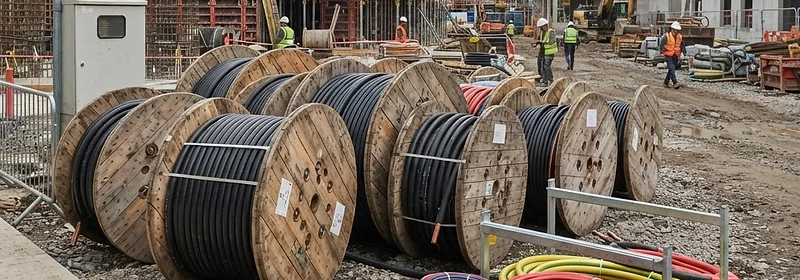
Cable is one of the easiest MEP items to buy badly. It looks identical on a drum, it is heavy enough to be hard to inspect, and a supplier who substitutes a thinner conductor or a lower fire class saves money on every metre while the certificate still says the right words.
In the Gulf the stakes are higher. Ambient temperatures force derating, fire codes for occupied buildings are strict, and coastal installations corrode every unsealed component.
Standards you should see named
LV power: IEC 60502-1, BS 5467, BS 6724, covering construction, armouring and sheath.
MV power: IEC 60502-2 for screened XLPE cables to 30 kV.
Fire resistant: BS 6387 CWZ and IEC 60331, covering circuit integrity under fire.
Flame retardant: IEC 60332-1 and 60332-3, covering flame spread on trays and bunches.
Low smoke: IEC 61034 and IEC 60754, covering smoke density and halogen acid gas.
The distinction that matters most is between fire resistant and flame retardant. Flame retardant cable does not spread fire. Fire resistant cable keeps working during a fire, and that is what life safety systems need: detection, alarms, emergency lighting, smoke fans and pumps. Specifying flame retardant where fire resistant is required is a recurring and dangerous substitution.
Derating for a 50 degree site
Cable current ratings are published for 30 degrees ambient in air. At 45 to 50 degrees, with several circuits grouped on a tray, the correction factors stack. A design that ignores them produces a cable that runs hot from the first summer and fails early.
- Apply the ambient correction factor from the standard tables, not a guess
- Apply grouping factors for bunched circuits and trays with more than one layer
- Apply the installation method factor for buried, in conduit, on tray or in free air
- Check voltage drop after derating, since the cable that meets current rating may still be too small for drop at the far end
- Confirm the neutral and earth sizes, particularly for harmonics and for protective conductor sizing under local rules
Conductor and construction
Copper is the default for reliability and terminations. Aluminium works for large feeders where weight and cost matter, with the caveat that aluminium terminations need correct bimetallic connections and will fail at a joint done badly.
Armouring gives mechanical protection and provides the earth path in many designs. Steel wire armour is standard for buried and external runs, steel tape armour for protected routes. On coastal sites, specify the sheath and the armour corrosion protection explicitly, including the outer sheath type, because exposed steel armour in a marine atmosphere is a slow failure waiting to happen.
Verifying what arrived
- Certification from a recognised body, BASEC or KEMA, on the specific cable type and size, not on a different product from the same factory
- Drum length verification, since short drums are the classic way to make a cheap quote look competitive
- Conductor diameter and strand count checked against the standard, not just the nominal size
- Insulation thickness measured on a sample, not assumed from the label
- Fire test reports referenced to the exact cable designation
Terminations, joints and glands
Most cable failures are at the ends. Glands selected for the cable type and the environment, correct shroud, correct torque, and a proper earth tag. Joints made only where unavoidable, by a competent jointer, with a kit approved for that cable, and with a test result recorded. In hot humid conditions the seal at the gland is what keeps moisture out of the bedding.
Testing and handover
Insulation resistance tests, continuity, phase rotation, and a schedule of results per circuit as part of handover. For fire rated circuits, evidence that the installation method preserved the rating, since a fire rated cable clipped with plastic ties to a plastic tray does not behave as tested.
Sourcing through Kinetic
Post an inquiry with the standard, sizes, conductor material, fire class, total length, drum lengths required and the certification your consultant demands. Mills, stockists and distributors respond with quotes, and contact details stay locked until you accept a bid.
For the plant these cables feed, see our guides to HVAC equipment sourcing for Gulf projects and earthing, overfill protection and metering.
Frequently asked questions
What is the difference between LSZH and PVC? LSZH emits very little smoke and no corrosive halogen gas when it burns, which is why it is mandated in occupied and confined spaces. PVC is cheaper and smokes heavily.
Do I need fire resistant cable for all circuits? No. Only circuits whose function must survive a fire: alarms, detection, emergency lighting, smoke control, pumps and life safety interfaces.
How much derating at 50 degrees? Typically 15 to 25 percent reduction on air ratings before grouping factors apply. It varies by insulation type, so use the tables.
Is aluminium cable acceptable? Yes for large feeders, with correct terminations and proper support. It is less forgiving of poor workmanship than copper.
Related Articles

Grounding, Overfill Protection and Metering at Qatar Fuel Terminals
31 Oct 2026

Operable Walls in Qatar: Vertically Retractable Acoustic Partitions for Hotels, Ballrooms and Conference Venues
1 Nov 2026

EMC and RF Testing for Qatar Projects: Chamber Validation, Shielding and Compliance
1 Nov 2026Looking for materials?
Post an inquiry on the Kinetic marketplace and connect with verified suppliers across the Gulf.