
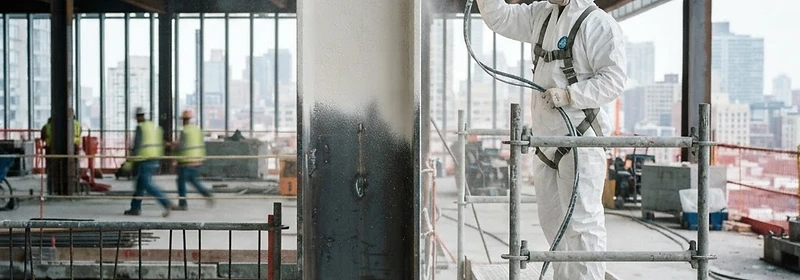
Steel Structure Fire Protection in Qatar: Intumescent Paint, Boards, Sprays and How to Choose
"Why protect steel from fire when it doesn't burn?" It is a common question with a critical answer: structural steel loses around half of its load-bearing strength at approximately 550°C. In a serious building fire, unprotected steel reaches that temperature within minutes, and once columns and beams buckle, compartmentation and structural integrity are destroyed. Fire protection for steel is not about stopping the steel from burning, it is about slowing its temperature rise long enough for people to evacuate and firefighters to work.
With Qatar's skyline of high-rise steel frames, long-span stadium roofs, warehouses and petrochemical facilities, choosing the right steel fireproofing system is a core specification decision. This guide explains the options, intumescent paint, fire protection boards, sprayed mortars and concrete encasement, the standards behind them, and how to choose for Gulf conditions.
The Two Fire Scenarios: Cellulosic vs Hydrocarbon
Cellulosic fire: the standard design fire for offices, residential and commercial buildings (ISO 834 / ASTM E119 curve): a slower temperature rise, peaking around 945–1,000°C over hours.
Hydrocarbon fire: the design fire for oil, gas and petrochemical facilities: temperatures reach 1,000°C within the first minutes. Qatar's energy sector facilities must design for this curve, and the required protection thicknesses and systems differ substantially from cellulosic ratings.
Always confirm which curve your project's authority requires before specifying any system, a cellulosic-rated product cannot simply be "thickened" for hydrocarbon service; it needs hydrocarbon-tested data.
The Four Main Steel Fire Protection Methods
1. Intumescent Paint (Reactive Coating)
A thin-film coating applied like paint. In fire it reacts chemically: the coating swells (intumesces) to many times its original thickness, absorbing heat and forming a thick insulating char that shields the steel profile and delays it reaching its critical temperature.
- Best for: exposed steelwork where aesthetics matter, atria, airports, stadiums, architecturally expressed structures
- Standards: tested under EN 13381-8 (reactive protection for steel elements), note this differs from the EN 13381-4 used for boards and sprays. The reactive standard requires testing on both open profiles (IPE, HEB, IPN) and closed/hollow sections
- System build-up: anti-corrosive primer + intumescent coat + protective topcoat. The topcoat is not optional: intumescent layers are porous and absorb humidity, which destroys their fire performance, a critical point in Qatar's coastal humidity
- Water-based versions offer low VOC emissions, suitable for interior application and relevant for GSAS/LEED sustainability credits
- Watch-outs: thickness is calculated per profile (section factor), application quality is everything, and site QA must include wet and dry film thickness checks
2. Fire Protection Boards
Cementitious or calcium silicate boards fixed to form a box around the steel section.
- Best for: columns in car parks, warehouses and industrial buildings; semi-exposed locations needing mechanical robustness
- Standards: EN 13381-4 test data (tested on open profiles with correction factors for closed sections)
- Advantages: durable, clean dry installation, damage-resistant, ready for direct decoration
- Watch-outs: slower to install around complex connections; box sizes reduce usable space on large sections
3. Sprayed Fire-Resistant Mortars
Vermiculite or cement-based sprays applied directly onto the profile.
- Best for: concealed steelwork, beams above ceilings, large repetitive areas, budget-driven projects
- Advantages: fast coverage, follows complex profiles, low material cost
- Watch-outs: rough finish (rarely acceptable on exposed steel), sensitive to application quality, can shed with vibration and wash-down; not suitable for hydrocarbon ratings unless specifically tested
4. Concrete Encasement
Solid concrete poured around or between steel flanges, the traditional method.
- Best for: heavy industrial and petrochemical structures, hydrocarbon scenarios
- Advantages: extreme robustness, excellent for high fire loads
- Watch-outs: heavy, slow, adds significant permanent load to the structure, increases foundation costs
Quick Comparison
Intumescent paint: thin profile, architectural finish, off-site application possible; needs primer + topcoat, humidity-sensitive during application.
Boards: robust and dry-applied; bulkier, slower on complex connections.
Sprays: fastest and cheapest per m²; rough finish, application-quality dependent.
Concrete encasement: ultimate durability for hydrocarbon/industrial service; heavy, slow, costly in structure.
Many large Gulf projects combine systems: intumescent paint on exposed atrium steel, boards in the car park, sprays above suspended ceilings.
Selecting for Gulf Conditions
- Humidity and chloride air: coastal Doha sites demand proven topcoats over intumescents and corrosion-resistant fixings for boards; request durability and accelerated weathering data.
- Heat during application: coatings applied in 45°C+ summers need products with extended pot life and recoat windows suited to the climate; check the manufacturer's application temperature limits.
- Section factor discipline: required thickness for intumescents depends on each profile's section factor (Hp/A). A single generic thickness across all steel leads to failures at inspection, insist on a thickness schedule per profile.
- Off-site coating: applying intumescent paint in controlled workshop conditions improves quality and speeds the site programme; increasingly standard on Gulf high-rise packages.
- Third-party certification: look for independent certification to EN 13381-4/-8, UL 263 or equivalent, plus GSAS/QCS compliance documentation for Qatar authorities.
- Compatibility testing: primer, intumescent and topcoat must be one tested system; mixing brands voids most certifications.
Standards Reference
- EN 13381-4: fire resistance tests for non-reactive protection (boards, sprays) applied to steel
- EN 13381-8: fire resistance tests for reactive protection (intumescent coatings) applied to steel
- EN 13501-2: fire resistance classification of systems
- ISO 834 / ASTM E119 / UL 263: cellulosic furnace curves
- Hydrocarbon curve (e.g. UL 1709): for petrochemical applications
- QCS and GSAS: Qatar Construction Specifications and Gulf sustainability scheme requirements
Frequently Asked Questions
At what temperature does steel fail in a fire?
Structural steel loses about half of its strength at around 550°C, commonly treated as the critical temperature. Fire protection systems are rated to keep the steel below its critical temperature for the design period (typically 60, 90 or 120 minutes).
How does intumescent paint protect steel?
When heated, the coating swells to many times its applied thickness, forming a thermally insulating char. This delays heat transfer into the steel profile, extending the time before it reaches its critical temperature. It is tested under EN 13381-8.
Is intumescent paint enough on its own?
No. It needs an anti-corrosive primer beneath it and a protective topcoat above it. Without the topcoat, the porous intumescent layer absorbs moisture and loses its fire performance, especially in humid coastal environments like Doha.
Intumescent paint or fire protection boards, which is better?
Paint suits exposed, architecturally finished steelwork and complex profiles; boards suit concealed or semi-exposed steel needing mechanical robustness. Both carry certified ratings when tested to EN 13381-8 and -4 respectively, the choice is architectural, logistical and budgetary rather than one of safety class.
Do petrochemical projects need different steel fireproofing?
Yes. Oil and gas facilities design against hydrocarbon fire curves, where temperatures exceed 1,000°C within minutes. Systems must be specifically tested for hydrocarbon exposure, standard cellulosic-rated products are not adequate.
Conclusion
Steel fire protection is a specification decision, not a commodity purchase. Match the system to the fire scenario (cellulosic vs hydrocarbon), the exposure (architectural vs industrial), and the Gulf climate, then demand the right test evidence, certified applicators and a thickness schedule per profile.
Post a detailed inquiry on Kinetic to receive quotes from verified fire protection suppliers and applicators in Qatar, or get a contact directly from SRG.
Read next: Tunnel Fire Protection in Qatar: Concrete Spalling, Fire Curves & Protection Boards
Related Articles

Firefighting Equipment Guide for Qatar: Hose, Storz Couplings, Valves, Foam & Nozzles to QCDD Standards
17 Oct 2026

Tunnel Fire Protection in Qatar: Concrete Spalling, Fire Curves & Protection Boards
12 Oct 2026

Smoke & Fire Curtains: Complete Guide to Standards, Types & Specifications for Gulf Projects (2026)
31 Aug 2026Looking for materials?
Post an inquiry on the Kinetic marketplace and connect with verified suppliers across the Gulf.