

Smart Lockers in Qatar: Parcel, Delivery and Workplace Locker Systems for Homes, Offices and Retail
The locker has become software. A smart locker is a self-service, automated storage unit with an electronic access system: users open compartments with a PIN, QR code, RFID card or smartphone app, and a central management platform logs every deposit, opening and retrieval. What used to be a steel box with a key is now a networked service that moves parcels, devices and personal belongings through buildings without staff handling them.
In Qatar, smart lockers are moving quickly from a convenience to an expectation: residential towers receiving e-commerce volumes, corporate offices managing laptops and devices, retail running click and collect, and public venues from universities to stadiums handling belongings and equipment. This guide explains the smart locker categories, the access and management technology inside them, the business case, and how to specify and source smart locker systems in Qatar and the GCC.
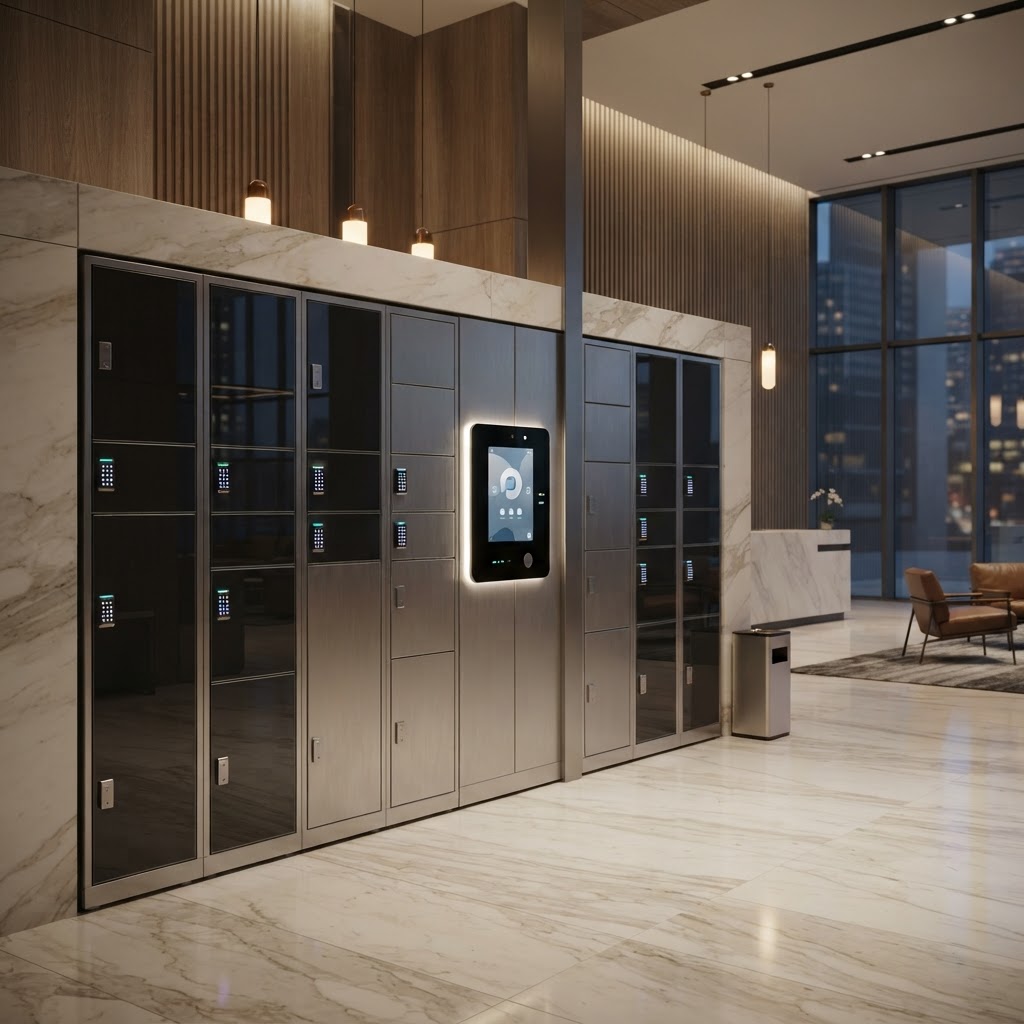
What Is a Smart Locker System?
A smart locker system combines three layers:
- The hardware: a bank of compartments in different sizes, with electronically actuated locks, a central control unit, a user interface (touchscreen kiosk or keypad) and usually a camera for security events
- The access layer: PIN codes, QR codes sent to a phone, RFID or access cards, biometrics on high security models, or locker doors released remotely by an attendant
- The software: a cloud or on-premise management platform that assigns compartments, notifies users, records every transaction, integrates with couriers or the building's access control system, and produces usage analytics
The defining feature is the transaction log: every opening is recorded with a time stamp and a user identity. That is what turns storage into management, and it is why smart lockers increasingly sit inside corporate security and IT asset policies rather than facility furniture.
Types of Smart Lockers in Qatar
Smart parcel and delivery lockers
The largest category, driven by e-commerce growth in Qatar. Couriers deposit a parcel into a compartment, the recipient receives a notification with a code or QR, and collects at any hour. For residential towers and office buildings in Doha, parcel lockers solve three problems at once: concierge overflow, unattended parcels in corridors, and residents missing deliveries.
On the courier side the economics are well documented: consolidated locker stops cut the per-stop delivery time from several minutes to well under two minutes, which is why last mile delivery locker networks are expanding across the GCC. Returns work the same way in reverse: the customer deposits, the courier collects.
Click and collect lockers for retail
Retailers use the same hardware as a self-service pickup point for online and pre-ordered goods: grocery, pharmacy, fashion, electronics and food orders in heated or refrigerated compartments. A click and collect locker lets a store serve pickup customers outside staffed hours, from a smaller footprint than a service counter.
Workplace and employee smart lockers
Modern offices are moving from assigned lockers to smart lockers allocated dynamically: an employee books or claims a compartment for a day, a week or permanently. In hot desk and hybrid working layouts this cuts the locker count a building needs while improving utilisation. In Gulf office towers, smart employee lockers also support the privacy and personal storage expectations of staff who commute or pray on site, with compartments reserved flexibly through the day.
IT asset and device lockers
A specialised workplace category: lockers that store, charge and track laptops, tablets, radios, scanners and shared devices. Device lockers automate check-out and return: the asset is issued to a user against their identity, the system records custody, and charging happens in the compartment. IT teams use them for device swaps, loaner pools and break-fix handovers without a staffed desk, and every handoff is logged for audit.
Asset management and equipment lockers
Beyond IT: tools, radios, keys, PPE, medical equipment and controlled items issued and returned through smart lockers with full traceability. Hospitals, facilities teams, security operations and industrial sites in Qatar use smart equipment lockers to control high value consumables and comply with audit requirements.
Personal storage lockers for venues
Universities, gyms, pools, leisure centres, hospitals and stadiums replace coin and key lockers with app or PIN operated lockers: no lost keys, no cash handling, remote management, and usage analytics that size the locker bank correctly.
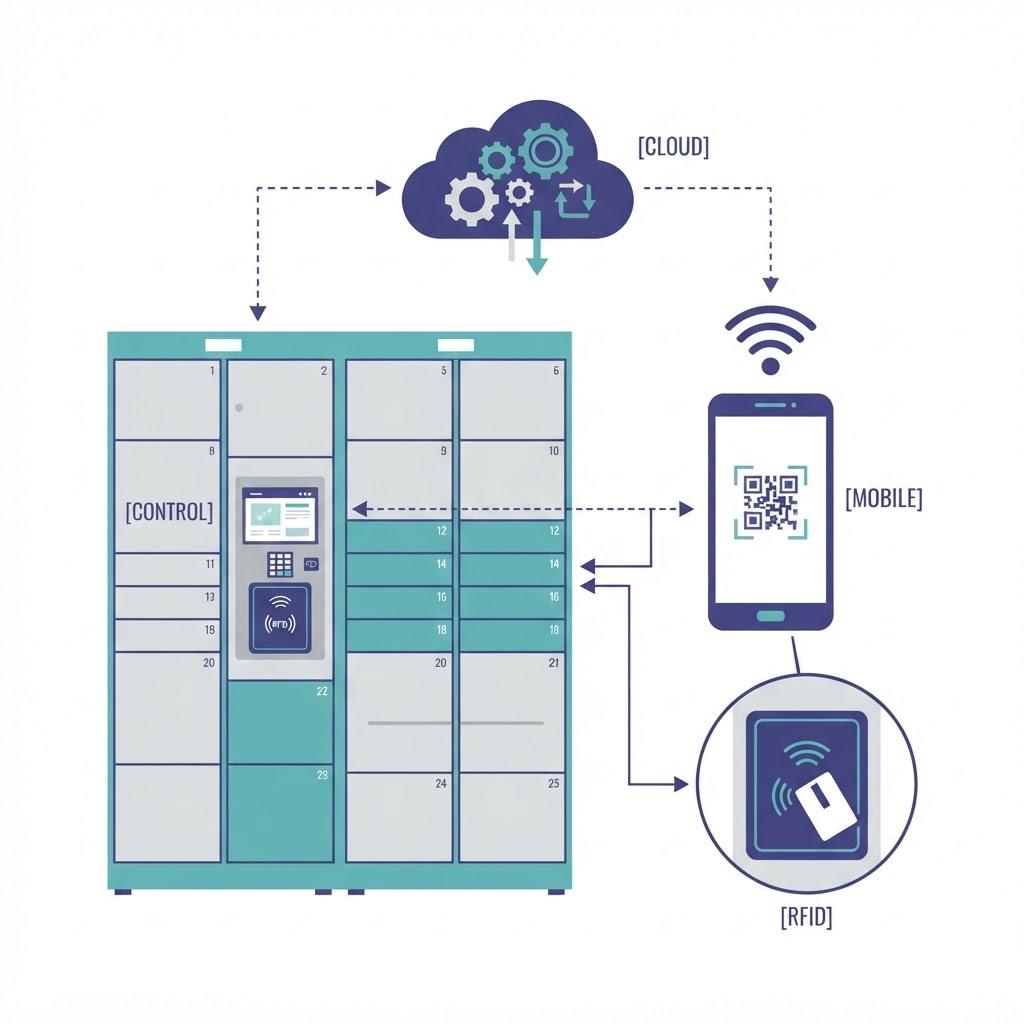
Access and Security Technology
- Access methods: PIN codes delivered by SMS or app, QR codes, RFID cards and fobs, smartphone app with push notification, and biometrics on high security models. Many systems layer methods: a code for the user, a card for staff, a master override for administration
- Compartment locks: electronic actuated locks controlled centrally; some designs keep a mechanical emergency override per compartment
- Surveillance: cameras covering the locker face, and event photos captured on each opening on some models
- Integration: API connections to courier platforms, building access control systems, HR or IT systems, so locker access follows the same identity governance as the rest of the building
- Security of the platform: cloud dashboards with role based permissions, audit logs and tamper alerts
For secure storage beyond parcels, note that smart lockers serve convenience and traceability, while certified safes and safe deposit systems address burglary resistance: for banking grade storage see our guide to bank safes, vault doors and safe deposit locker systems in Qatar.
The Business Case for Smart Lockers
- Staff time: parcel handling at a concierge or mailroom becomes self-service; a building or office with high parcel volumes can recover significant admin hours every week
- Delivery success: couriers complete deliveries first attempt, to a secure compartment, reducing failed delivery costs and customer calls
- Security and accountability: no unattended parcels in corridors, no lost keys, and a complete transaction log for every compartment
- Asset control: for device and equipment lockers, the system knows who holds what, cutting asset loss and audit effort
- Utilisation: dynamic allocation means fewer lockers serve more users, which matters where floor space is expensive
- Experience: recipients collect when it suits them, 24/7, which is now a baseline expectation in premium residential and office product in Qatar
Where Smart Lockers Are Deploying in Qatar
- Residential and mixed use towers: parcel locker banks in lobbies handling e-commerce volumes for hundreds of units, sized to daily parcel counts
- Corporate offices: employee personal storage, IT device lockers and courier points for incoming goods
- Retail and grocery: click and collect pickup walls, including heated and refrigerated compartments for food
- Universities and schools: student and staff lockers, device lending for classrooms
- Hospitals and clinics: staff device lockers, personal storage, and controlled equipment issue
- Stadiums and venues: visitor belongings, staff equipment, and event logistics
- Industrial and energy sites: PPE and tool issue with traceability at security gates
- Logistics hubs and pickup points: courier consolidation and self-service pickup networks across Doha
Qatar's urban projects amplify all of these: high density mixed use developments such as Lusail and the sustained premium standard of new towers, stadiums and institutions create exactly the high volume, high expectation environments where locker systems earn their cost.
Specifying Smart Lockers: A Practical Checklist
- Start with volumes: daily parcels per building, or devices per floor, drive the compartment count and size mix
- Right size the compartments: measure the real parcel and device sizes; a bank with too many small doors fills fast, too many large doors wastes capacity
- Choose the access model: PIN, QR, app, card or a combination, aligned with what users already carry
- Decide cloud or on-premise: cloud platforms give updates and dashboards; on-premise suits data sensitive environments
- Check integrations early: building access control, courier apps, IT systems, and any API the operator needs
- Plan power and data: the locker bank needs a power connection and network path, positioned at the design stage
- Specify the software: dynamic allocation, analytics, notifications, multi language support including Arabic, and role based administration
- Demand audit and security features: event logging, camera coverage, tamper detection, emergency access procedures
- Plan for operations: who administers the system, how lost access is handled, and how the bank is cleaned and maintained
- Check standards and warranties: electrical safety, fire behaviour of finishes, structural fixing to the wall, and local service support from the supplier
Frequently Asked Questions
What is a smart locker?
An electronically operated storage compartment system: users open compartments using PIN codes, QR codes, RFID cards or a smartphone app, and a management platform records every transaction. Smart lockers automate parcel delivery, click and collect, personal storage and equipment or IT asset handling.
How do smart parcel lockers work in Qatar?
The courier deposits the parcel in a compartment and the system notifies the recipient with a code or QR link. The recipient opens the compartment at any time with that code, and the event is logged. Returns work in reverse, with the courier collecting from the locker.
What do smart locker systems cost?
Cost depends on compartment count, size mix, access technology and software model (cloud subscription or one-off licence). The useful planning number is cost per usable compartment: a bank sized correctly for the parcel or device volume normally recovers its cost through staff time saved and delivery success improved. Request quotes with the compartment mix, software terms and installation included.
Can smart lockers be used for workplace devices and laptops?
Yes. IT asset lockers store, charge and track devices: each check-out and return is recorded against a user, charging happens in the compartment, and IT departments use them for loaner pools, device swaps and asset audits.
Are smart lockers secure?
Access is logged and compartment doors are electronically locked, often with camera coverage and tamper alerts. Smart lockers provide traceability and controlled access; for burglary rated storage, certified safes and safe deposit systems are the appropriate products.
Do smart lockers support Arabic and multiple languages?
Established systems support multiple interface languages including Arabic, and notifications can be templated per language: a requirement worth stating explicitly in any Qatar specification.
Can lockers be integrated with building access control?
Most commercial platforms offer APIs and card reader options to align locker access with the building's identity and access control system, including staff RFID cards.
Who supplies smart locker systems in Qatar?
Specialist manufacturers and system integrators supply and install smart locker systems in the GCC, through local agents and fit-out contractors. Because projects combine hardware, software and integration, buyers in Qatar typically source through suppliers who can support commissioning and after-sales service locally.
Conclusion
Smart lockers are no longer an amenity: they are operational infrastructure for buildings and organisations that move parcels, devices and personal belongings at volume. In Qatar's residential towers, offices, retail and institutions, the decision framework is consistent: size the bank from real volumes, choose the access model users already carry, and specify the software and integrations as carefully as the steel.
Post a detailed inquiry on Kinetic to receive quotes from verified suppliers of smart locker systems in Qatar, or get a contact directly from SRG.
Related Articles

Operable Walls in Qatar: Vertically Retractable Acoustic Partitions for Hotels, Ballrooms and Conference Venues
1 Nov 2026

EMC and RF Testing for Qatar Projects: Chamber Validation, Shielding and Compliance
1 Nov 2026

Fixed and Ship Ladders in Qatar: Safe Vertical Access to Roofs, Silos and Tanks
31 Oct 2026Looking for materials?
Post an inquiry on the Kinetic marketplace and connect with verified suppliers across the Gulf.