

Bank Safes, Vault Doors and Safe Deposit Locker Systems in Qatar: Physical Security for Financial Institutions
A bank's physical security starts with a simple question: where does the value sit when the screens are off? Cash in the teller drawer, customer valuables in deposit lockers, documents and data in cabinets, and the vault behind a door that must resist everything from a smash and grab to a sustained professional attack. Every one of those storage points is a certified product category, and every branch project in Qatar has to select, install and document them correctly.
This guide explains the safe storage portfolio for banks: safes and cabinets, strongrooms, vault doors, mechanical and automated safe deposit locker systems, and high-security locking solutions. It covers the certification system behind these products, what each component does, and how banks, contractors and suppliers in Qatar should approach specification, installation and compliance.
The Certification System: Why Grades Matter
Physical security products for banks are classified by attack resistance under European standards, and the certification is the backbone of any specification:
- EN 1143-1: the reference standard for testing and classifying high security safes, strongroom doors and strongrooms. It defines resistance grades, rising from Grade I up to Grade XIII for strongroom doors, based on tested resistance to burglary tools, time and expertise
- EN 1300: the classification standard for locks on secure storage units, grading the locking mechanism itself
- EN 14450: the standard for security cabinets for lower value storage needs
For a bank, the grade is not a marketing claim. It is the tested, certified resistance level that underwriters, insurers and internal audit all rely on. Specifications name the grade, the certificate and the certifying body, and the delivered product must match.
Safes and Cabinets
Safes and cabinets protect cash, documents, data media and other valuable assets in daily banking operations:
- Free-standing safes: certified to EN 1143-1, installed in teller areas, back offices and cash offices for overnight cash and document storage
- Deposit safes and night safes: allow deposits without opening the safe, so cash can be secured during trading hours
- ATM safes: tested cassettes and safe bodies that form the physical core of the machine
- Security cabinets: to EN 14450 for lower sensitivity storage, or data cabinets protecting backup media and documents
- Furniture safes and under-counter models: for branches where layout and space are constrained
Selection depends on the value held, the insurer's requirements and the branch layout. As a rule, the safe grade rises with the cash holding, and the specification should match the insurance threshold rather than the price point of the safe.
Strongrooms and Vault Doors
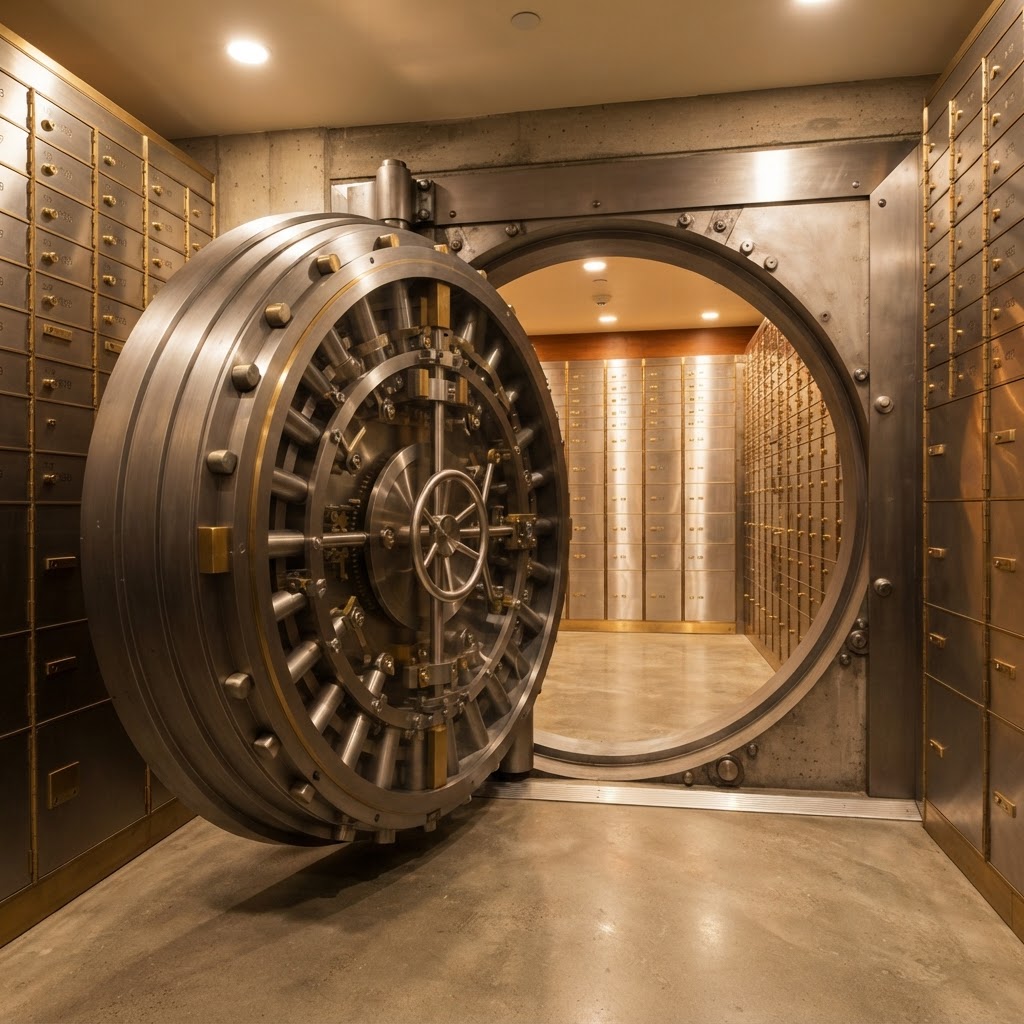
The strongroom is the heart of branch security: a walk-in, reinforced security room for cash handling, sorting and high value storage.
- Strongroom construction: modular panel strongrooms are built on site from certified reinforced components, which makes them practical for branch fit-outs where poured concrete vaults are not feasible
- Vault doors: certified to EN 1143-1 at high grades, engineered against drilling, cutting, explosive and thermal attacks. Options include emergency escape doors inside the main leaf, time locks and time delay systems
- Installation: the door and the room form one certified system, so the frame installation, wall composition and reinforcement all follow the manufacturer's tested design
For banks in Qatar, strongroom projects usually run inside a wider branch fit-out programme, which puts a premium on suppliers who can coordinate with the main contractor and deliver installation documentation for inspection and handover.
Safe Deposit Locker Systems
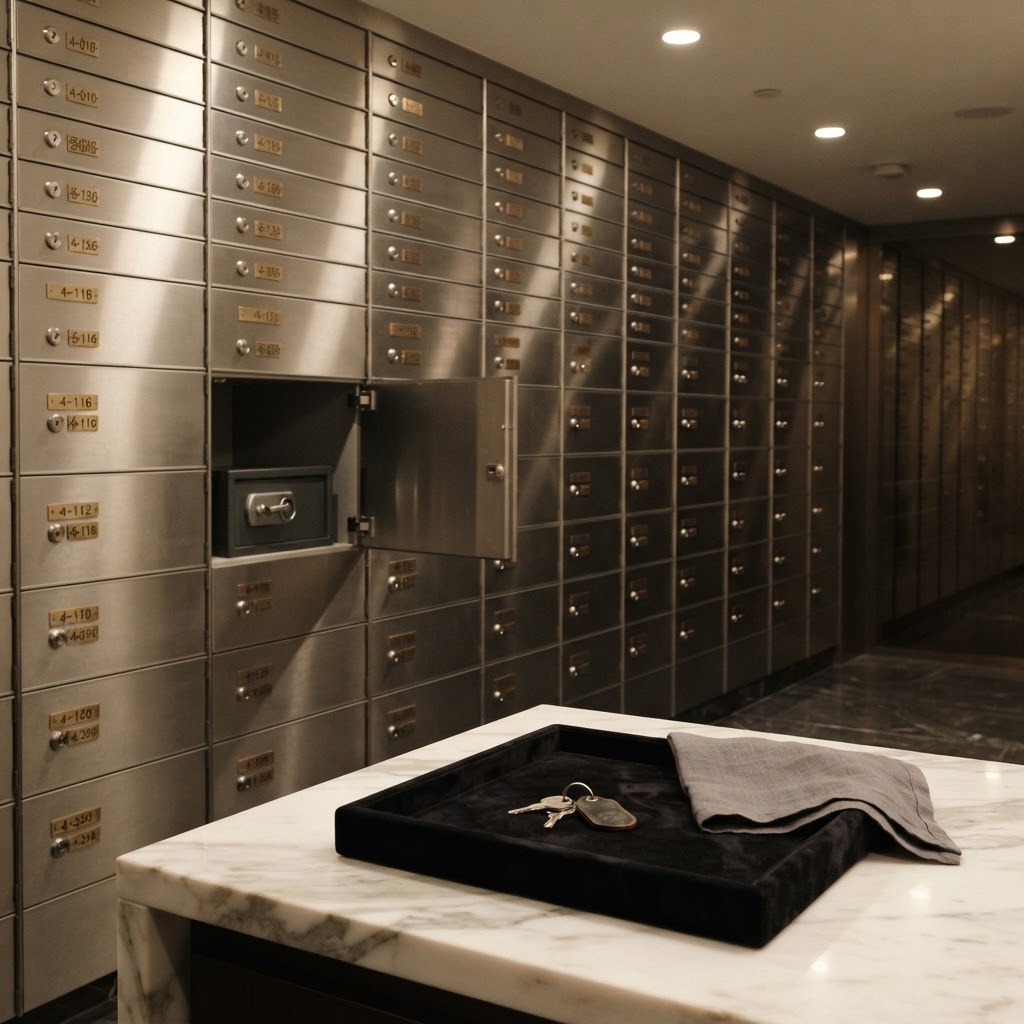
Safe deposit lockers (SDLs) let bank customers store valuables in individual compartments inside the vault or strongroom. There are two main systems:
- Mechanical safe deposit lockers: robust, mechanically locked locker walls that maximise the number of boxes in the available vault space. Dual-key operation (the customer's key plus the guard key) remains the traditional security model, and modern layouts support efficient branch operations
- Automated safe deposit lockers: robotic, self-service systems that store the boxes in a secure vault and present the customer's box at a service point on request. They remove the vault corridor entirely, allow extended access hours, reduce staff handling, and generate a full digital audit trail of every access
Automated SDLs are increasingly relevant in Qatar's premium retail banking market, where customer experience and operational efficiency both matter: self-service access reduces manual handling, and the branch gains floor space that a traditional locker corridor would consume.
High-Security Locks and Locking Systems
Locks are where physical security becomes controllable security:
- Certified lock classes: high security locks classified under EN 1300, combining mechanical, electronic and dual control operation
- Electronic locks with audit trails: every opening is logged, giving banks traceability across vaults, strongrooms and restricted storage areas
- Access management: integration with the branch's access control and security management systems, so storage area access follows the same governance as every other controlled door
- Key and code management: dual custody rules, time delay and suppression of combination visibility support internal control policies
Locking selection should be made together with the safe or door, because a certified body is rated as a complete assembly.
Why This Matters for Qatar
Qatar's banking sector combines a dense domestic branch network with continuous new fit-outs and upgrades, and physical security expectations are high across the market:
- Branch projects: every new or refurbished branch in Qatar needs certified safes, deposit systems and, in many cases, a strongroom package delivered inside the fit-out programme
- Premium customer services: safe deposit services are a flagship offering for premium and private banking customers in Doha, which drives demand for both mechanical locker walls and automated systems
- Regulatory environment: banks in Qatar operate under Qatar Central Bank oversight and their own internal security standards, and physical security measures form part of the overall security and risk framework banks are expected to maintain
- Insurance driven grades: insurers and internal audit require certified resistance grades, so submittals must include the actual certificates
- Import and installation: these products are heavy, engineered-to-order items with long lead times, so procurement planning and installation documentation matter as much as the purchase price
Specifying Bank Safe Storage: A Practical Checklist
- Start from the risk assessment: match safe and door grades to the values stored and the insurer's requirements, not to generic product tiers
- Name the standards in the specification: EN 1143-1 grade for safes, strongrooms and vault doors, EN 1300 for locks, EN 14450 for cabinets, with certificates from a recognised certification body
- Design the strongroom as a system: door, walls, reinforcement and services penetrations follow one tested design
- Plan the locker layout early: mechanical locker walls consume vault space, so locker counts and sizes must be settled with the layout, not after
- Consider automation for new premium branches: automated SDLs trade floor space and staff handling for capital cost, and work best when planned into the branch concept from the start
- Coordinate with the fit-out programme: floor loading, wall openings and installation sequencing for heavy safes and vault doors must be in the main contractor's plan
- Demand documentation: certificates, test reports, installation instructions and as-built records for inspection, insurance and handover
- Plan service and support: lock servicing, combination changes, locker maintenance and spare parts have long service lives, so local support capability is part of the selection
Frequently Asked Questions
What security equipment do bank branches need?
A layered set: certified safes and deposit safes for daily cash, a strongroom or vault with a certified vault door for high value storage, safe deposit locker systems for customer valuables, and certified high-security locks with audit trails across all storage areas.
What is a strongroom?
A reinforced, walk-in security room built from certified components, protected by a certified strongroom door. It hosts cash handling operations and high value storage, and it is rated under EN 1143-1 as a complete assembly.
What grade vault door does a bank need?
The required grade depends on the values stored, the insurer's requirements and the bank's internal security standard. EN 1143-1 defines the grade ladder, and the specification should reference the tested certificate rather than a generic description.
What is the difference between mechanical and automated safe deposit lockers?
Mechanical lockers are fixed locker walls with dual-key operation inside the vault. Automated systems are robotic: boxes are stored in a secure vault and presented at a self-service point, which reduces staff handling, extends access hours and logs every access digitally.
Why do locks need their own certification?
EN 1300 classifies locks for secure storage units independently of the cabinet or door. Because a complete unit is only as strong as its lock, banks specify certified lock classes alongside the safe or door grade.
Are certified safes required by regulators in Qatar?
Banks in Qatar operate under Qatar Central Bank oversight and their own internal security and risk standards. Certified resistance grades are driven by insurance requirements and internal audit, and certificates are standard submittal evidence in branch projects.
Can strongrooms be built in existing branches?
Yes. Modular strongroom systems are assembled from certified reinforced panels on site, which allows a strongroom to be installed inside an existing building without poured concrete construction.
What should a bank ask suppliers for?
EN certificates with the resistance grade, test documentation, installation instructions, and support for commissioning and ongoing service, plus references from comparable bank projects.
Conclusion
Bank safe storage is a certified, systems-level discipline: safes, strongrooms, vault doors, deposit lockers and locks must each match the risk they protect, and each other. For banks and fit-out contractors in Qatar, the practical path is to specify by certified grade, plan the vault and locker layout early, and procure from suppliers who can deliver both the certificates and the installation.
Post a detailed inquiry on Kinetic to receive quotes from verified suppliers of bank safes, vault doors and safe deposit systems, or get a contact directly from SRG.
Related Articles


Spill Containment in Qatar: Track Pans, Berms, Pallets and Secondary Containment
31 Oct 2026
Dock Equipment in Qatar: Levelers, Vehicle Restraints and Loading Bay Safety
31 Oct 2026

Fall Protection at Loading Bays in Qatar: Safety Gates, Handrails, Lifelines and Harnesses
31 Oct 2026Looking for materials?
Post an inquiry on the Kinetic marketplace and connect with verified suppliers across the Gulf.