
Dock Equipment in Qatar: Levelers, Vehicle Restraints and Loading Bay Safety
A loading bay looks like a hole in a wall with a ramp. In operation it is the point where three separate hazards meet: a reversing heavy vehicle, a powered industrial truck moving in and out, and a person who has to walk between them to connect or check something. Every year across the Gulf, the incidents that result are the same handful of types, a trailer that creeps forward while a forklift is on board, a forklift that drives off the edge of an open dock, a driver who falls between the vehicle and the wall.
The equipment that prevents those incidents is well established and inexpensive relative to the asset it protects. It is also routinely value engineered out of warehouses in Qatar, then added back later after an incident. This guide covers the equipment that makes a bay safe, the standards to reference in a specification, and the decisions that matter in a Gulf climate.
The Components of a Working Bay
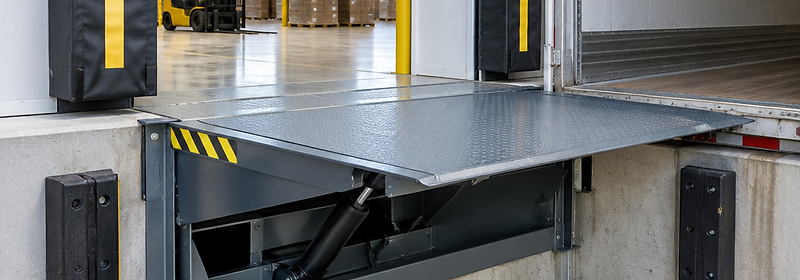
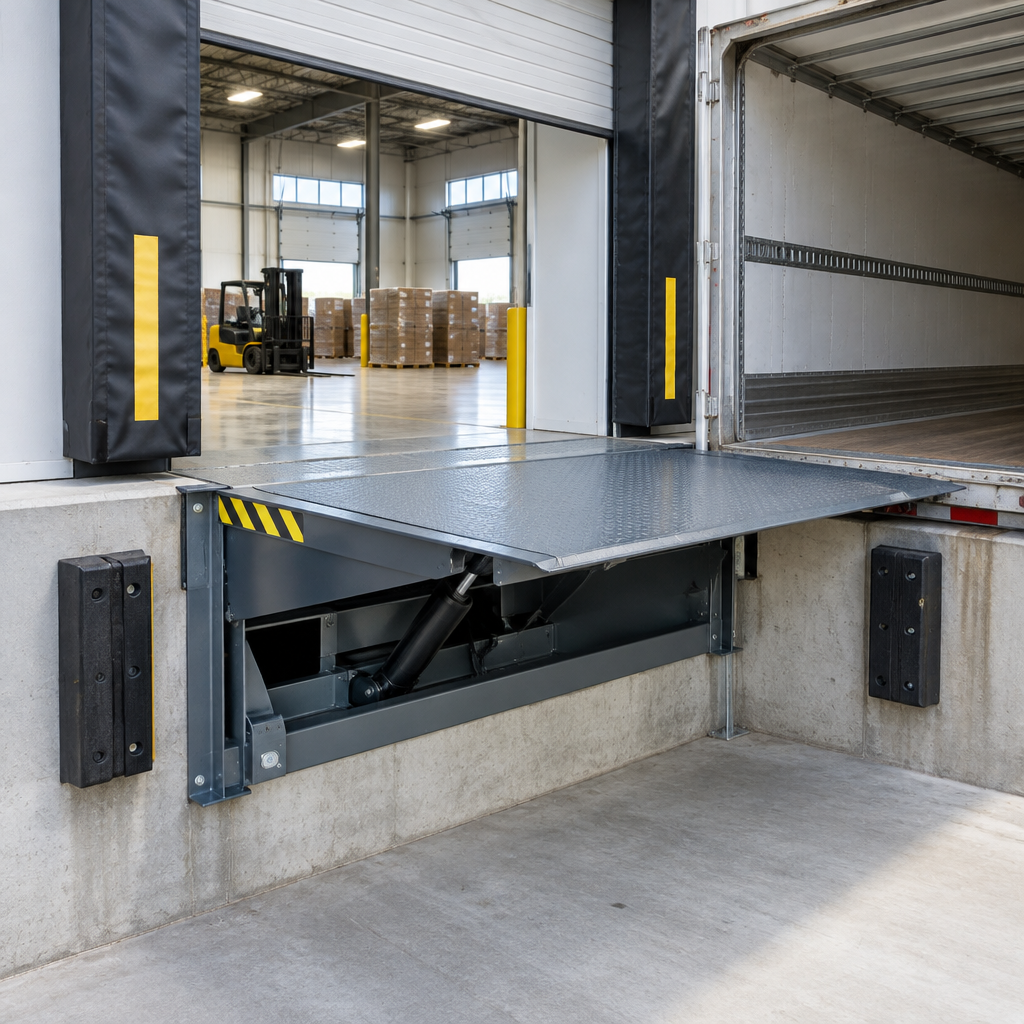
Dock levelers: the platform that bridges the height difference between the dock floor and the vehicle bed. Forklifts and pallet trucks pass over it hundreds of times a day, so it is a load-bearing machine, not a plate.
Vehicle restraints: a hook or barrier that engages the vehicle's rear impact guard and holds it against the dock while loading takes place. This is the safety-critical component in the bay, and the one most often missing.
Wheel chocks and dock plates: the manual alternatives for sites where a restraint is not installed. Chocks work only if a person places them, every time, which is the reason restraints are preferred.
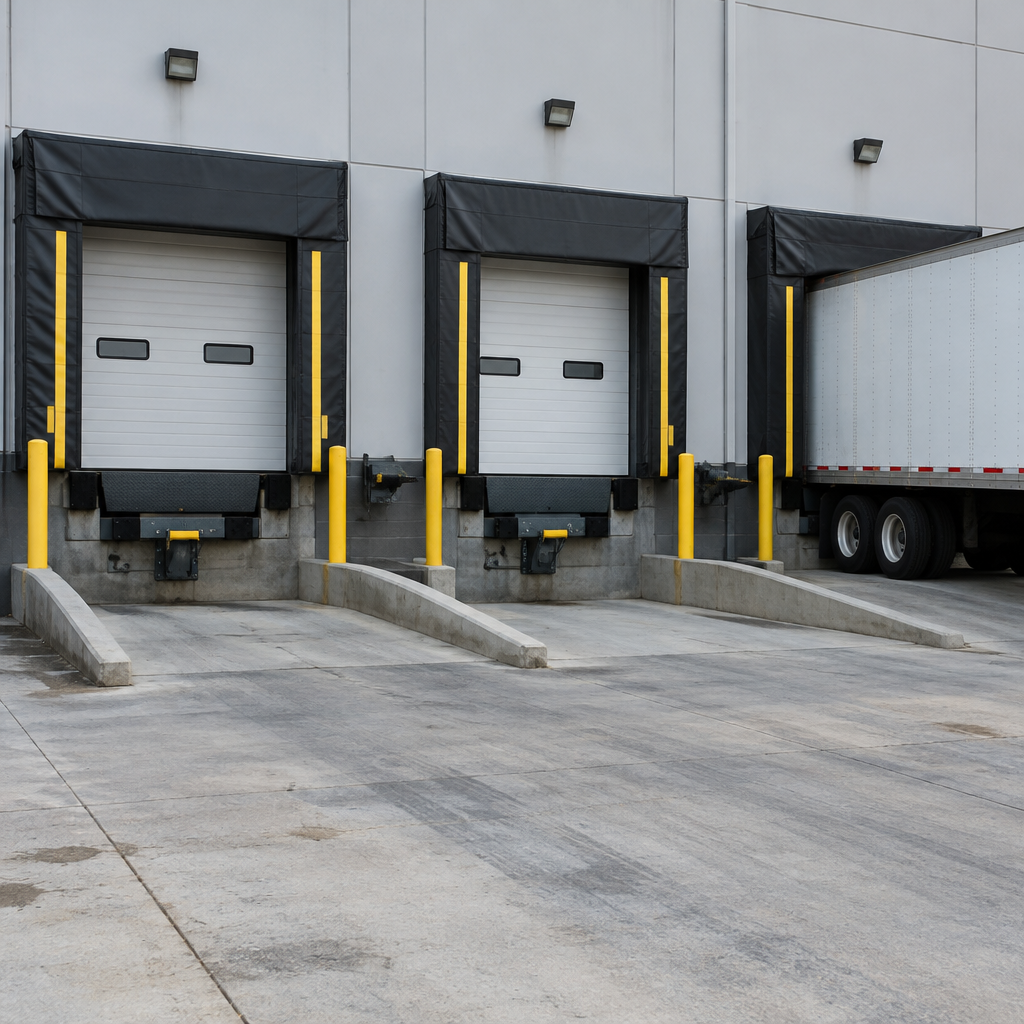
Dock seals and shelters: the compressible frame that closes the gap around the vehicle, keeping heat, dust, rain and pests out. In Qatar the dust control function is as important as the thermal one.
Dock bumpers, guides and bollards: the sacrificial steel that absorbs impact so the concrete and the door frame do not have to.
Doors and dock houses: the roller shutter or sectional door, plus any enclosure around the bay.
Signalling: traffic lights, reversing alarms, dock lights, signage and communication between the driver and the loading team. Most dock incidents include a communication failure.
Rail and yard equipment: derails, wheel stops, chocks and railcar stops where rail serves the dock.
Dock Levelers: Choosing the Right Type
Three families dominate:
Mechanical levelers use springs and a hold-down system. They cost less, need the operator to walk the lip down, and are adequate for moderate traffic in a warehouse that loads a few vehicles a day.
Hydraulic levelers raise and lower under power with a push button, and the lip extends automatically. They suit high-cycle operations, cold stores and any bay where the operator should not be doing physical work in 45 degree heat. This is the default choice for serious logistics facilities in Qatar.
Air powered levelers use pneumatic bags, common in food and cold chain facilities where hydraulic oil is unwelcome and where air is already available.
Within each family the specification decisions are:
- Capacity: the rated load must cover the heaviest forklift plus its load plus dynamic impact, not the average pallet. A 6 tonne rating is not generous for a busy bay handling laden forklifts
- Service range: how far above and below dock height the leveler can operate. Vehicle bed heights vary by trailer type, and a leveler at the edge of its range becomes a ramp with a dangerous gradient
- Lip length: the lip has to land on the vehicle bed, not in the gap. Longer lips cover a wider variety of vehicles and badly parked trailers
- Platform size: dictated by the largest forklift and the turning space it needs, not by the door width
- Below-dock clearance: pit depth and drainage, which matters in a climate where wash-down water and dust accumulate in pits
Vehicle Restraints and Drive-Away Prevention
The single most valuable safety device at a loading dock is the one that stops the vehicle leaving while someone is inside it. The principle is simple: the restraint engages the rear impact guard, an interlock with the door and the leveler prevents operation until the restraint is engaged, and a light inside the bay tells the driver when it is safe to pull away.
The variants:
- Hook restraints: engage the rear impact guard and hold the vehicle. The standard choice for most fleets
- Wheel restraints: a rotating arm that captures a rear wheel, useful where guards are damaged or non-standard
- Automatic restraints: engage without operator action when the vehicle reverses into position, removing the human step that gets skipped at 3 am
- Drive-away prevention interlocks: integrated signalling that links the restraint to the door, the leveler and a driver light
For sites without restraints, the fallback is chocks plus a documented procedure, and it should be understood as a temporary control rather than equivalent protection. A chock that is left on the dock floor is not a safety device, it is a trip hazard.
Dock Seals, Shelters and the Gulf Climate
The seal is where energy performance and hygiene meet.
In a chilled or air conditioned warehouse, an open bay is a hole in the building envelope. Seals and shelters reduce that loss, but they also keep out the two things that damage Gulf warehouses fastest: fine dust and heat. Dust enters through every gap, settles on stock, contaminates food and pharma products and coats machinery. A properly sized shelter with a good head curtain is a contamination control measure as much as an energy measure.
The specification points:
- Seal or shelter: a seal compresses against the vehicle body, a shelter is a larger structure that encloses the vehicle rear. Shelters suit high volumes of varied vehicles, seals suit tighter budgets and consistent fleets
- Material: fabric that survives UV. Standard PVC degrades quickly in direct Gulf sun, so specify UV stabilised material and expect to replace wearable panels on a cycle
- Sizing: the opening must suit the largest and smallest vehicles in the fleet, otherwise the seal is decorative
- Pest control: for food and pharma, the seal is part of the pest proofing strategy and should be documented as such
Bumpers, Guides and Yard Protection
Dock bumpers absorb the energy of a reversing trailer, and they are the cheapest item in the bay and the most frequently destroyed. Specify moulded rubber or heavy duty laminated bumpers rather than light pads, mount them so the vehicle contacts the bumper rather than the wall, and expect to replace them.
Add wheel guides where drivers have to reverse into a tight bay. A pair of steel guides costs a fraction of a damaged door frame, and in a busy yard with a high turnover of drivers they pay for themselves within weeks.
Standards and Compliance for a Qatar Specification
- EN 1398: the European standard for dock levellers, covering design loads, safety requirements and testing. The most useful reference for leveler specification
- EN 12453 and EN 12604: power operated doors, where the bay door is powered
- EN ISO 13849: safety related control systems, relevant to interlocks between restraint, door and leveler
- ANSI/DASMA 105 and MH30.1: North American leveler and restraint standards, often quoted by suppliers working to US practice
- OSHA 1910.178 and 1910.30: powered industrial trucks and dock-related training, relevant where US practice is adopted
- QCS 2014: Qatar Construction Specifications for civil and structural works around the bay
- Qatar HSE requirements: Labour Law 14 of 2004 and the associated ministerial provisions, plus the facility's own permit and traffic management regime
Design Decisions That Prevent Incidents
- Position the restraint so it engages the vehicle's actual rear impact guard, not where the drawing assumes it will be
- Interlock the restraint with the door and leveler so a sequence exists and cannot be short cut
- Provide a driver light inside the bay, large and green, that tells the driver when to leave
- Keep pedestrian routes physically separated from vehicle reversing paths, with barriers rather than painted lines
- Slope the apron away from the door so rain and wash water do not run into the warehouse
- Design the yard for the largest vehicle that will ever arrive, including turning circles and waiting space
- Light the apron properly, reversing at night is where the damage happens
- Protect the door frame with guides and bollards, and treat them as consumables
- Drain the pit, because a leveler sitting in water corrodes and its hydraulics fail
- Put the operating controls where the operator can see the whole operation, not behind the vehicle
Coordination With the Rest of the Facility
The bay is not an isolated system. It interfaces with the fire strategy of the warehouse, the security and access control regime, the cold chain design where relevant, and the internal traffic management plan. In Qatar the growth of logistics capacity around Hamad Port and the free zones has made this coordination more formal, because modern warehouses are designed as flow systems and the bay is the inlet and outlet of that flow.
The interface that most often gets forgotten is the one between the dock and the roof or mezzanine access above it. Equipment on the roof, from chillers to PV arrays, needs safe access, and the same rules apply as for every other vertical access point, as covered in our guide to roof hatches and roof access in Qatar. A warehouse is a series of connected access decisions, not a set of separate purchases.
For facilities handling flammable or hazardous goods, the bay also sits inside the fire protection philosophy of the site. The equipment that supports that philosophy, from fire rated doors to blast protection, is the same category of procurement described in our fire, smoke and blast protection sourcing guide.
Maintenance and Inspection
Loading bay equipment fails in predictable ways, and the inspection routine should follow them:
- Test the leveler through its full cycle daily or per shift, and check the lip extension fully
- Inspect hydraulic hoses and cylinders for leaks, and keep the oil specification available for top-up
- Test the vehicle restraint engagement weekly, including the interlock and the driver light
- Check dock bumpers monthly and replace before the vehicle starts contacting the wall
- Inspect seal fabric for tears and replace panels before dust ingress becomes a product issue
- Keep a spares holding of the items that always fail: bumpers, seal panels, lip sensors and hydraulic fittings
Frequently Asked Questions
Is a vehicle restraint mandatory at a loading dock in Qatar?
There is no single clause that mandates a restraint on every bay, but the facility's HSE obligations, its permit to work system and its own risk assessment almost always lead to one. A restraint with an interlock is the accepted best practice, and it is the first item an auditor or an insurer will ask about.
Hydraulic or mechanical dock leveler?
Hydraulic for anything above light use, for cold stores and for any site where the operator should not be manually handling heavy components in high temperatures. Mechanical levelers remain viable for low-cycle warehouses with disciplined procedures.
What capacity should a dock leveler be rated for?
It must cover the heaviest forklift plus load plus dynamic impact. A common mistake is specifying to the nominal forklift rating rather than the working load, which leaves the platform under-designed for real traffic.
Do I need dock shelters if the warehouse is not air conditioned?
Yes, for dust, pests and rain. In Qatar a shelter or seal is a hygiene and contamination control measure even without a thermal requirement, and it protects stock during the occasional heavy rain.
How often should dock equipment be inspected?
Levelers and restraints are used every shift, so the daily check belongs in the operator routine, with a more detailed monthly inspection and an annual review of the whole bay including the structure and fixings.
Conclusion
A loading bay is the highest-risk square metre of a warehouse, and the equipment that makes it safe is neither complex nor expensive. The order of priorities is clear: restraint and interlock first, a leveler sized to the real load second, seals and bumpers to protect the building and the product third, and guides, lighting and signage to make the whole thing work at night with an unfamiliar driver.
For projects in Qatar, specify to EN 1398 for levelers, insist on the interlock and the driver light, choose UV stabilised seal materials, and buy the consumables with the equipment so bumpers and panels do not become a six week delay. Then put the daily check in the operator's routine, because the equipment only works if the person at the controls uses it.
Post a detailed inquiry on Kinetic to receive quotes from verified suppliers of dock levelers, vehicle restraints and loading bay equipment in Qatar, or get a contact directly from SRG.
Source dock equipment, levelers and loading bay safety systems on Kinetic.
Related Articles


Spill Containment in Qatar: Track Pans, Berms, Pallets and Secondary Containment
31 Oct 2026

Fall Protection at Loading Bays in Qatar: Safety Gates, Handrails, Lifelines and Harnesses
31 Oct 2026

Safety Showers and Eyewash Stations in Qatar: ANSI Z358.1, Tepid Water and Compliance
31 Oct 2026Looking for materials?
Post an inquiry on the Kinetic marketplace and connect with verified suppliers across the Gulf.