

NBC Survival Shelters, Bomb Shelters and Safe Rooms: Underground Protection for Homes and Facilities in Qatar
Security above ground is common in the Gulf: gates, cameras, guards. The next layer is below ground. An NBC shelter (nuclear, biological and chemical) is a sealed, ventilated, blast resistant space designed to keep its occupants alive when the environment outside becomes the hazard, whether from fallout, a toxic release, a blast wave or a civil emergency.
This guide explains what a survival shelter is, the types available, how shelter life support works, what goes into a properly engineered installation, and how private owners, developers and organisations in Qatar and the GCC should approach specifying and sourcing one.
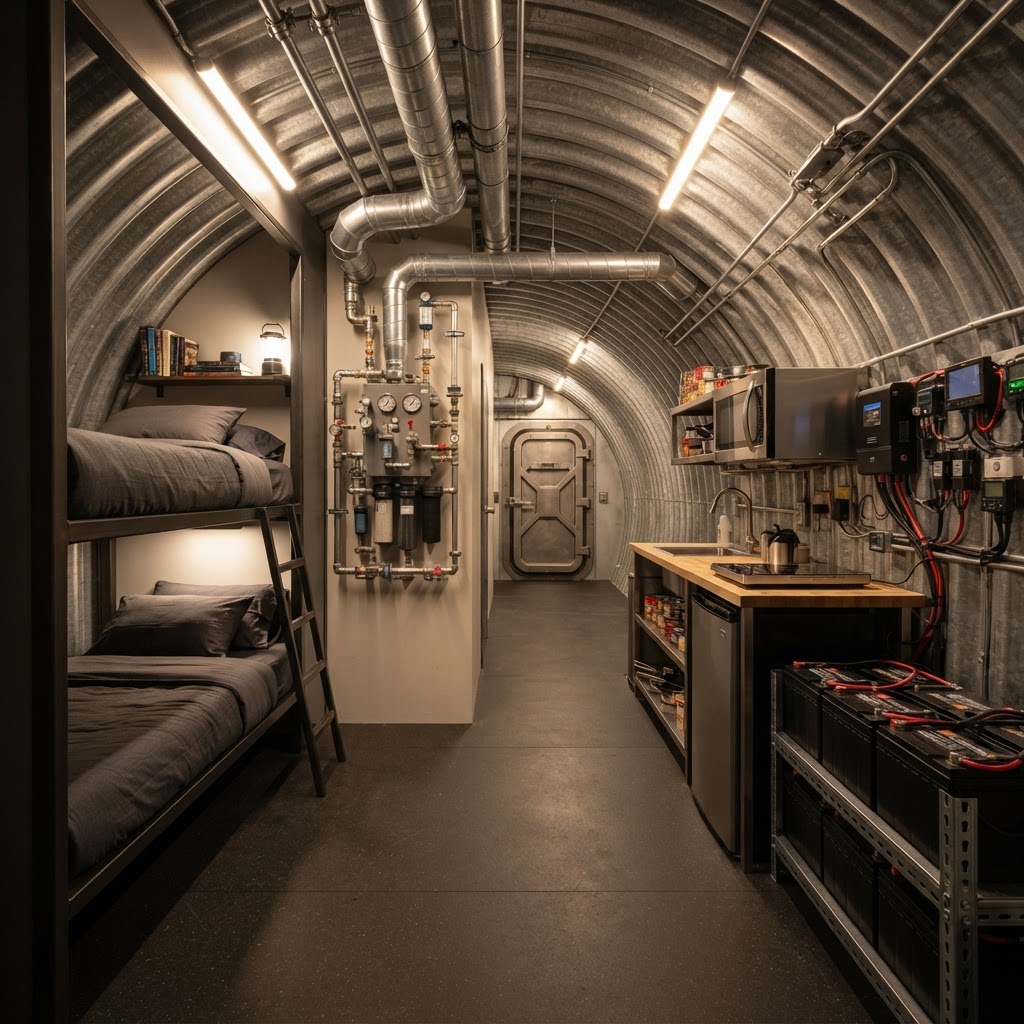
What Is an NBC Survival Shelter?
An NBC shelter is a hardened, air-tight enclosure built to protect occupants against nuclear fallout, biological agents, chemical toxins and blast overpressure for hours or days without outside support. Unlike a panic room, which only delays an intruder, a shelter is a life support system: it must control air, water, sanitation and power while sealing out a contaminated environment.
The level of protection follows the threat list:
- Blast: resistance to the pressure wave of an explosion at the surface
- Fallout and radiation: dense construction that attenuates gamma radiation, plus filtered air so particles never enter
- Chemical and biological agents: sealed envelope and NBC filtration that removes toxic vapours and pathogens from intake air
- Fire and heat: isolation from a burning environment
- Civil unrest: forced entry resistance for the duration of an event
Switzerland is the reference case for this discipline: civil shelter construction is a legal requirement for residential buildings, and the country maintains a mature industry of certified shelter components, from blast doors to NBC filtration units.
Types of Survival Shelters
Specialist shelter manufacturers offer a small number of proven formats:
Pre-manufactured steel shelters
Factory-built steel capsules, in standard models and sizes, delivered complete and craned into an excavated hole, then covered. Advantages:
- Quality control: welding, sealing and outfitting are done in the factory, not in a muddy trench
- Speed: installation on site takes days rather than months
- Predictability: the delivered product matches the tested design, and manufacturers keep a stock of standard models available
- Options: layouts from a small cellar for a family to multi-room units with bunks, kitchenette, bathroom and generator space
Concrete poured shelters
Cast on site in reinforced concrete, for larger or site-specific designs where steel capsules are not suitable. These suit estate basements that double as shelters and larger institutional projects.
Safe cellars and safe rooms
Smaller hardened rooms installed inside or beneath an existing building: a protected core for a family or a small group, with the same air filtration logic as a full shelter.
Air raid and refuge shelters
Larger capacity systems for groups, organisations and facilities: multiple rooms, blast doors at both ends, larger filtration plants and planned occupancy management.
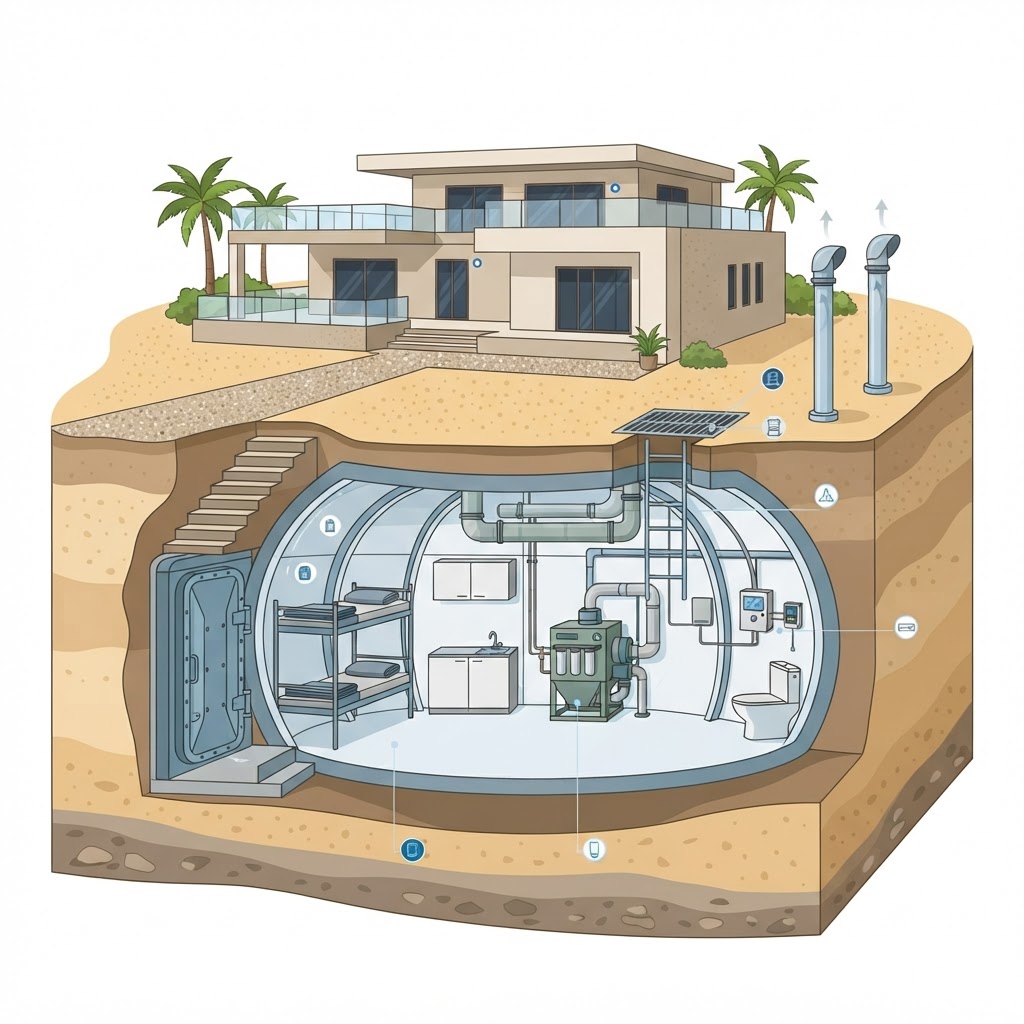
Life Support: The Engineering Inside the Shell
A shelter fails from the inside more often than from the outside. The critical systems:
NBC air filtration and overpressure
The heart of the shelter. A filtration unit draws outside air through particulate and activated carbon stages that remove fallout dust, toxic gases and biological agents, and delivers it inside at a slight positive pressure, so any leak flows outward, never inward. Established European manufacturers produce certified NBC filtration plants of the type used by national civil defence organisations, including units rated for hundreds of occupants.
CO2 scrubbing
If the air system is shut down, or intake and exhaust pipes are blocked by debris, occupants still breathe, and carbon dioxide accumulates. Quality shelters include a CO2 scrubber that removes carbon dioxide from the recirculated internal air, which extends the sealed survival time from hours to days. This is a distinguishing feature of serious shelter designs.
Blast protection on the ventilation path
Intake and exhaust terminals above ground are protected by blast valves that slam shut when a pressure wave arrives, and by construction that resists debris. The ventilation path is both the shelter's lifeline and its greatest vulnerability, and it must be engineered, not improvised.
Blast doors and emergency hatches
Certified blast doors protect the entrance against overpressure and debris. Emergency escape hatches provide a second way out if the main door is blocked, and some designs include escape tunnels.
Power, water and sanitation
Battery banks with low power lighting, potable water storage, food storage, a chemical or incinerating toilet and a first aid station complete the occupancy plan. The design answers the question: how many people, for how many days, at what comfort level?
Sizing and Layout
Shelter planning starts with occupancy and duration:
- Occupancy: the number of people determines floor area, bunk count, water volume and toilet capacity
- Duration: sealed survival time drives air scrubbing capacity, water and food storage
- Comfort level: a basic refuge and a residential shelter with kitchenette and bathroom are different products
- Layout: entrance airlock or decontamination position, sleeping area, systems room, storage
- Access: how occupants reach the shelter quickly from the residence, including for elderly family members
For private owners in the Gulf, a common solution is a family shelter of four to eight occupants placed beneath a villa garden, driveway or new extension, with a discreet entrance from inside the property.
Why Interest Is Growing in Qatar and the GCC
Several currents are converging in the region:
- Regional tension awareness: events in the Gulf in recent years have made resilience planning a normal part of risk management for families and organisations, not an eccentricity
- High value private estates: the regional market for luxury residences already expects hardened panic rooms, safe cores and filtered fresh air systems, and shelters are a natural extension
- Corporate and institutional duty of care: organisations with premises in the region increasingly plan refuge capacity for staff, on the same logic as fire safety
- Critical infrastructure: control rooms and refuge areas for energy and industrial sites, covered in protective construction standards
- Engineering culture: Gulf projects routinely build to international protective standards, and shelter products slot into that ecosystem with documented blast, sealing and filtration performance
The supply chain is international: shelters and filtration equipment are manufactured in the United States and Europe, and the delivery model that works for the GCC is a factory engineered unit, imported complete, with manufacturer supervision during installation. Specialist manufacturers maintain worldwide dealer and installation networks, with engineers who travel to supervise projects from small residential units to large institutional shelters.
Specifying a Shelter: A Practical Checklist
- Define the threat first: fallout, chemical release, blast, civil unrest or a combination, because the design case drives everything else
- Fix occupancy and duration: people count and sealed survival time size the air system, water storage and layout
- Choose the construction format: factory built steel for predictability and speed, poured concrete for large site specific designs
- Demand certified components: blast doors, valves and NBC filtration with documented test performance, from established manufacturers
- Insist on CO2 scrubbing: sealed survival time is the difference between a shelter and a hard room
- Plan the ventilation terminals: intake and exhaust positions, blast valves, and protection from debris and flooding
- Check the access route: travel time from living areas, and an emergency escape hatch
- Plan installation logistics: excavation, crane access, groundwater and soil conditions in coastal Gulf locations, backfill and surface finish
- Commission and document: air filtration flow tests, door operation, sealed envelope testing, and an operations manual the household or facility actually keeps
- Service schedule: filters, batteries and water stocks have shelf lives, so a maintenance plan belongs in the handover
Frequently Asked Questions
What is an NBC shelter?
A hardened, air-tight shelter that protects occupants against nuclear fallout, biological agents, chemical toxins and blast. It maintains a survivable internal environment with filtered air, positive pressure and life support stores.
What is the difference between a bomb shelter and a safe room?
A safe room or panic room resists forced entry for the duration of a security event. A bomb shelter additionally resists blast and fallout and keeps people alive inside a contaminated environment for days, which requires air filtration, scrubbing, water and sanitation.
How long can a sealed shelter support its occupants?
It depends on occupancy, volume, air filtration capacity and CO2 scrubbing. With filtration running, endurance is limited by utilities and stores; with the system sealed, CO2 scrubbers extend survival from hours to days. Serious designs quote a sealed endurance figure with the specification.
Why does a shelter need a CO2 scrubber?
If the air system stops or the pipes are blocked, occupants continue to exhale carbon dioxide, which becomes toxic at low concentrations. A scrubber removes CO2 from the recirculated air, extending the time the shelter can stay sealed.
Are pre-manufactured steel shelters better than poured concrete?
Neither is universally better. Factory steel units offer tested designs, quality control and fast installation; poured concrete suits large, site specific projects and basements that double as shelters. The threat case and site decide the choice.
Can a shelter be installed under an existing villa?
Yes. Small steel units can be excavated and installed under a garden, driveway or extension, with an entrance connected to the residence. Retrofit access and crane reach are the usual constraints.
What standards apply to shelters?
There is no single GCC residential shelter code, so specifications are built from international practice: civil defence shelter standards from shelter mandatory jurisdictions such as Switzerland, certified blast doors and valves, and documented NBC filtration performance. The specification should name the test evidence for every protective component.
Do manufacturers install shelters in the GCC?
Yes. Specialist manufacturers operate through dealer and installation networks and send engineers to supervise projects worldwide, including the Gulf. Import, excavation supervision and commissioning are part of a normal project scope.
Conclusion
An NBC shelter is the most demanding room a project can build: it must resist blast, seal out a contaminated world and keep its occupants breathing for days on stored and scrubbed air. The discipline is mature, the products are certified, and the delivery model for the Gulf is proven. For owners and developers in Qatar, the path is to define the threat, fix occupancy and endurance, demand documented components, and work with suppliers who can supervise installation and commissioning.
Post a detailed inquiry on Kinetic to receive quotes from verified suppliers of survival shelters, NBC filtration and protective construction products, or get a contact directly from SRG.
Source survival shelters and protective equipment on Kinetic.
Related Articles


Spill Containment in Qatar: Track Pans, Berms, Pallets and Secondary Containment
31 Oct 2026
Dock Equipment in Qatar: Levelers, Vehicle Restraints and Loading Bay Safety
31 Oct 2026

Fall Protection at Loading Bays in Qatar: Safety Gates, Handrails, Lifelines and Harnesses
31 Oct 2026Looking for materials?
Post an inquiry on the Kinetic marketplace and connect with verified suppliers across the Gulf.